

And the Summer winds down into school and harvest…
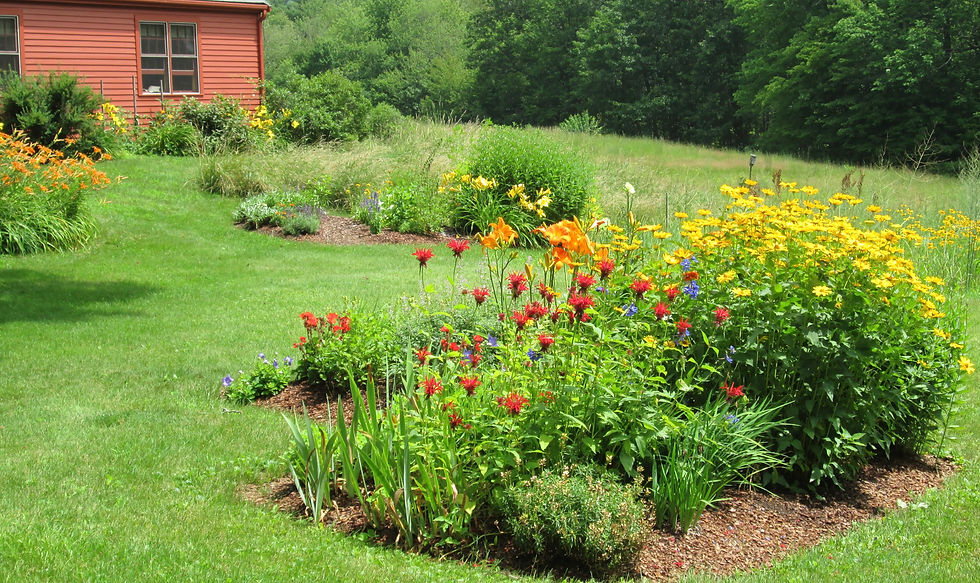
There is so much happening as the season starts winding down! Pollinators of all kinds are buzzing around their support plants in the Sideyard – check out our Facebook and Instagram posts for some of our favorite visitors. Pick up a few plants to support your own neighborhood pollinator networks.
The fall veggie crops are becoming available. We’re sowing them here at the store since there’s no way to buy them in. This means that the veggies become available as the weather and our time allows. We currently have carrots, turnips (for greens and roots – and – YES!! root crops can be transplanted!!), broccoli, lettuce, scallions, dill, cilantro, cucumbers, peas and beans available. Spinach, arugula, lettuce and scallions are all sown and waiting for germination to occur. :)
You’ll also find the key late season pollinator support plants like mountain mint, phlox, black eyed Susans, hyssops of several kinds, Pinky Pollen Ring hydrangea, butterfly bushes, bee balms and more. You get the point -this is the key time to add the flowers that actually bloom at this time of year – and check out the mud daubers, bumble bees, mason bees, butterflies, hummingbirds and other visitors to the Sideyard plants. Be sure to check out the road side garden while you’re visiting – the Verbena bonariensis is in full bloom (that tall purple haze that you see as you drive by) and every insect comes to visit it – awesome!! We have fresh plants coming in to wrap up the season – includes but is not limited to mums. Let the color glow!
Maintaining a garden into the fall because you love the garden or have an event.
You may find that you need to keep your garden(s) at peak for long after Labor Day – perhaps you’re hosting an event? Or you enjoy color in your gardens deep into the fall? Doesn’t matter the reason – it’s possible to keep containers and annual additions to gardens at peak color and performance deep in to the fall- think mid-October. One caveat - you’ll need to become a dab hand at managing fertilizers.
For years, I carried around a crate in each of my work vehicles that had molasses, liquid humates, Neptune’s Harvest fish/kelp, Jack’s 20-20-20 (blue crystal fertilizer), liquid silica, Palmolive dish soap, Sledgehammer (liquid yucca), Neem oil and several kinds of stabilized microbes. I’d craft a cocktail for whatever needs I saw when visiting a garden. This kind of list allows for all kinds of adaptations for both soil drenches and foliar applications.
Soil drenches are what people know best – a mix into a bucket or watering can and a metering out of the enhanced liquid on to the root system of the plants that need support.
You can also use a foliar spray on the leaves of the plant. This can be amazingly effective because plants can take up both minerals and sugars through the leaves. This is sort of like using an IV for the plant, straight into the vein so to speak. The trick is to apply the liquid before the dew dries in the morning (just after sunrise so spraying before sunrise is great) or after the heat has well left the day, usually after 6pm in the evening (always safest after sunset). This makes it a great job to do as you walk around your yard at the end of the day. I’ve used this approach to keep heavily grown containers in excellent color and production all the way through the first frost of October. It’s easy once you get the system set up. Make up your own crate, add a notebook to record successes and failures and you’re on your way.
Why do plants need extra support to thrive well in to the fall?
The BIGGEST cause of problems late in the season is that there is NOT ENOUGH ENERGY IN THE SYSTEM TO SUPPORT THE COMPLETION OF THE PLANT CYCLE. In an ideal world the plant would have all of the minerals, water (but not too much!) and sunshine that it needs at exactly the right time in its cycle to complete its production without any need for a gardener or farmers support (or interference!). No such world exists (of course!!) and all of our plants chosen by us to be grown for food production (or fantastic flowers) are no longer the scrappy and independent characters that they once were. Many in fact are down-right needy and totally incapable of being left to fend for themselves.
Your tomato (or zinnia, or whatever plant you’re working with) wants to be part of a well-developed soil ecosystem with LOTS of bacteria, fungi, worms, paramecium, amoeba and ciliates freeing up and moving minerals around so that the plant gets what it needs. It is (or should be!) a WILD AND WELL POPULATED world under your feet J You need to feed that soil ecosystem with lots of compost, rock dusts, alfalfa meal, and other soil system supports. If you get curious, there’s lots of information available in some of the earlier newsletters.
Here’s a quick reminder about the season’s beginnings might have looked even as we approach the season’s ending. Sometimes it helps to know what should have been in place J We’ll use a tomato as a focus – no other plant other than marijuana needs as much support. Start by mixing a five-gallon pail of good compost, 3-4 cups of good organic fertilizer (North Country Organics Pro-gro) and ½ cup of limestone to a planting hole 12”-15” wide and plant your tomato in the middle. You can reapply both the fertilizer at half strength and ½ the compost mid-season if needed. The plants will tell you if you keep your eyes open for subtle changes. Other veggies and flowers will need less than this – tomatoes win the hunger wars…
Water in well with a high energy drench. Recipe: looks something like this: 1 Tb fish/kelp, 1 Tb molasses, 1 Tb liquid humates, short squirt of castile and ¼ tsp of microbes per gallon of water. Plan to use this quickly because it is actually a living product and it will exhaust the oxygen in the water. Don’t let it sit for more than a couple of hours – and in the shade at that. This kind of drench needs to be applied to moist soil. Water first to 2” down if drought is an issue.
This same drench is the one that you’ll be using any time after August 1st if you have need of great gardens in the fall.
You’ll also plan to prune and tighten up the plants about 3 weeks before the event’s date. That way, you’ll have clean, new buds opening up as the event approaches.
And – now for next challenge that’s come through the doors at the store…
Controlling Poison Ivy, Bittersweet, Wild Grape, Knotweed,
Multiflora Rose and other invasive/aggressive plants
1. Cut all aerial parts of the vines and shrubs close to the ground any time before mid-July. Do not burn poison ivy stems or leaves. The goal here is to be able to spray down on to the leaves and not up in to the air.
2. Let the crown green up. Cut it again if there’s time before mid-July. You are gradually exhausting the root system. The more systematic you are the greater your chance of long-term success.
3. Now to remove the plant permanently.

Goats will eat them. Personally, I like goats (we have 25!) but they are only a partial answer at best and do require tending (but provide GREAT milk when browsing aggressive plants – especially bittersweet)!
Another option is to dig up the roots and remove them from the site. Takes either a lot of physical energy or machinery – or both! And the roots need to be landfilled not composted.
Organic weed killers will kill off the leaves but will leave the roots alive– and functioning – and ready to re-leaf as soon as the situation changes. Heavy salt applications cause long term damage to the soil.
Or a liquid herbicide can be applied. An herbicide, applied at the right time in the plant’s cycle and just to drip is a sure cure for aggressive plants. There is LOTS of back and forth on this issue and everyone has to find their own way through the confusion. I’ve found that a one-time application of a systemic herbicide in September can lead to a 98% elimination of the target plant (and any other plant caught up in the area – that may be an issue) and very little long-term damage to the site.
Here’s what will work with a minimum of damage to the ecosystem… In early September spray the recrowned plants with glyphosate, triclopyr or other systemic weedkiller. Follow directions on the container carefully. Be sure to coat all leaves but just to barely dripping. DON’T DROWN THE PLANT!! Apply while the plant is still actively growing. Leaves must be green for the herbicide to work. You can increase the absorption rate by adding a tablespoon of “blue crystal” fertilizer (like Miracle-gro), a squirt of soap (not the new Dawn – to aggressive) and a dollop of liquid humates. The soap helps the liquid to spread evenly and the other two items aid in absorption – allows you to use less weed killer for the same results. The weedkiller is absorbed into the tissue of the plant and since winter is approaching, the plant is going dormant and cannot fight off the effects of the herbicide. The plant has no chance to counteract the chemical and 95 % + of the plant should be dead the following spring. Watch for any weak re-growth through the following season. Repeat weedkiller in the following fall if necessary.
Once you’ve removed the invasives, you can then start on recovering the soil’s quality and health. A one-time application really causes very little damage and may not need extra care. One cool thing about being a human being is that you can greatly speed up quality soil development by years – using known information to speed up decades of geological/biological soil development and create truly viable soil in as little as one growing season. Neat, huh?!?! Again – check the resource section of the website - https://www.thegoodearthfgc.com/resources.
That’s enough of serious topics!!
Sheesh! You’d think that the gardening world is filled with nothing but problems and challenges! There are always challenges of course – it’s life after all J but you should also be finding joy in this wonderful end of season explosion of life in the insect, flower, food, bird and mammal world. There is NOTHING like a Monarch butterfly on a Butterfly Bush, a Hummingbird feeding at a Phlox flower or a Mud Dauber feeding on a Mountain Mint. Come to the store, wander around the Sideyard plants and just enjoy seeing the world around you. :)
See you at the store!


Comments